Injeongmun Gate, leading to Injeongjeon Hall at Changdeokgung Palace. Photo: Royal Palaces and Tombs Center, used under KOGL Type 1.
Part Two: Changdeokgung Palace
Of Seoul’s Five Grand Palaces, Changdeokgung may be the one that feels most at home in its surroundings.
Rather than forcing the typical rigid, symmetrical palace layout, its buildings were arranged around the natural slopes, trees and uneven terrain of the site. It's exceptional harmony between architecture and landscape is one of the reasons Changdeokgung is often described as the zenith of Seoul’s royal palaces and was designated as a UNESCO World Heritage site in 1997.
It is also home to one of the palace complex’s greatest treasures: the Huwon, more commonly known in English as the Secret Garden.
A Secondary Palace That Became the Royal Home
Changdeokgung Palace was built in 1405 during the reign of King Taejong, ten years after Gyeongbokgung was established as the principal palace of the new Joseon Dynasty.
It was originally intended to serve as a secondary palace, but history gave it a much larger role.
Both Gyeongbokgung and Changdeokgung were destroyed during the Japanese invasions of Korea in 1592. Changdeokgung was rebuilt first, reopening in 1610 during the reign of King Gwanghaegun. For roughly the next 270 years, it served as the primary residence of Joseon’s kings, and the primary palace in practice, while Gyeongbokgung remained in ruins.
Although Gyeongbokgung was the dynasty’s official principal palace, many kings reportedly preferred Changdeokgung. Its smaller scale, wooded grounds and more natural design may have made it feel more comfortable as a place to live.
A Palace Designed Around Nature
What makes Changdeokgung especially distinctive is the way it follows the land.
Traditional palace design generally favored orderly courtyards and buildings aligned along a central axis. Changdeokgung does not follow that structure as strictly. Its halls, residences and pathways curve around hills and existing natural features rather than flattening or reshaping them.
The result is a palace that feels less monumental than Gyeongbokgung, but perhaps more intimate.
UNESCO recognized Changdeokgung’s unusual layout and its harmony with the surrounding landscape when the palace complex was added to the World Heritage List in 1997. UNESCO describes it as an exceptional example of palace architecture and garden design adapted to the site’s natural topography.
As I did when I visited Changdeokgung, you may accidentally wander into Changgyeonggung Palace without realizing it, as there are no real boundaries that separate them from each other. It was built with such harmony with its surroundings that it's regarded as "the most Korean-style palace"1.
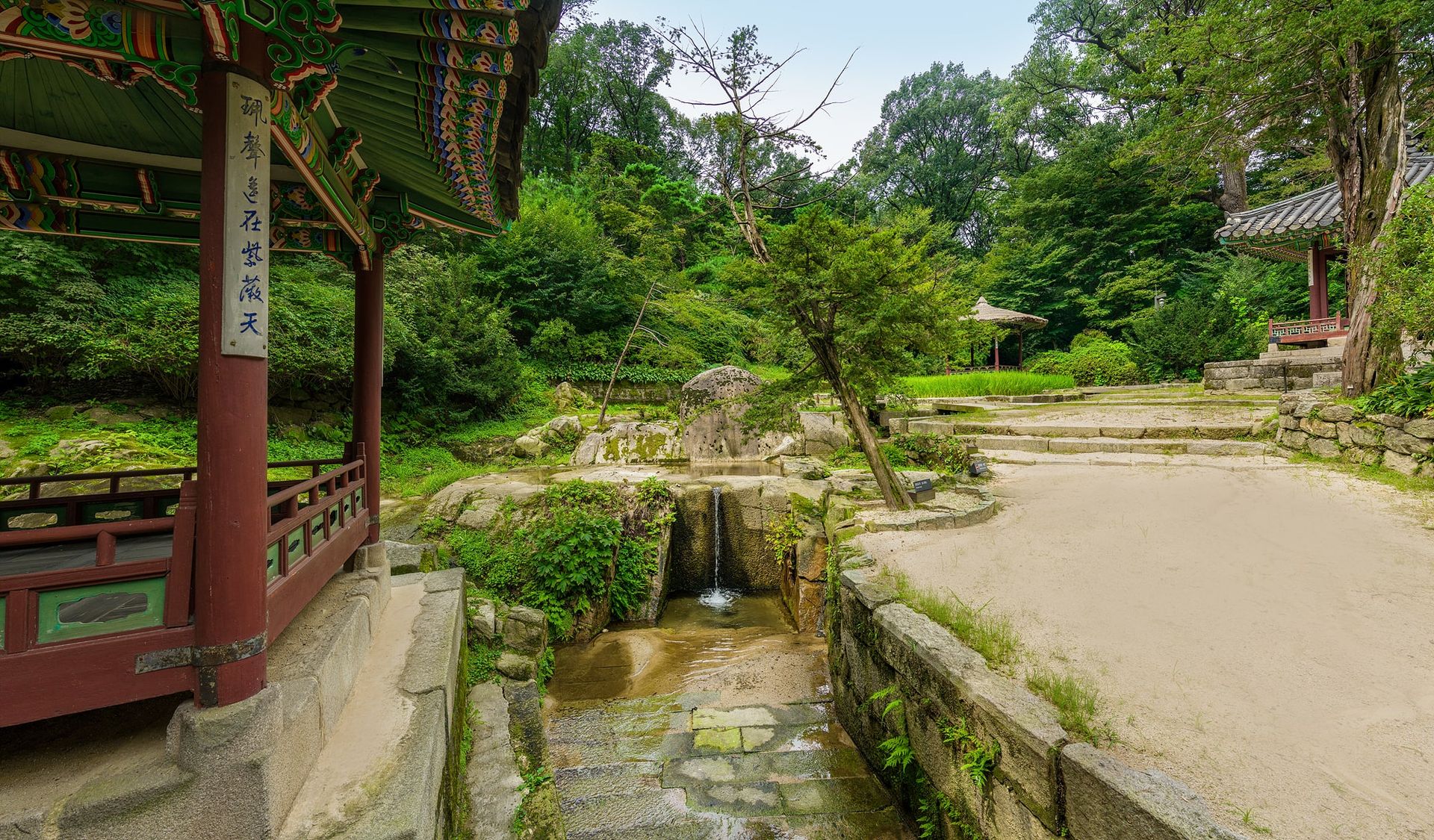
Soyojeong Pavilion in the Ongnyucheon area of Changdeokgung Palace’s Secret Garden. Photo: Royal Palaces and Tombs Center, used under KOGL Type 1.
The Secret Garden
The Huwon was first created behind the palace in 1406 and later expanded over several centuries. It was designed as a private retreat where members of the royal family could rest, study, entertain guests and escape the formality of court life.
The garden covers a large, wooded area behind the palace and includes ponds, streams, pavilions, libraries and secluded paths woven into the landscape.
Unlike a highly manicured European garden, the Huwon was designed to appear natural. Buildings were placed carefully around existing trees, hills and water features so they would complement the scenery rather than dominate it.
One of its most recognizable areas is Buyongji Pond, where the two-story Juhamnu Pavilion overlooks the water. King Jeongjo built Juhamnu and the nearby royal library complex after ascending the throne in 1776. The area blended scholarship, government and royal leisure in one peaceful setting.
Farther into the garden, visitors encounter additional ponds and pavilions, including the Aeryeonji area and Yeongyeongdang Hall, a residence constructed in the style of an upper-class home rather than a formal palace building.
The deeper you walk into the garden, the smaller and more intimate the spaces become. The garden was designed to move you from the more man-made areas and into the more natural world. Even the surrounding modern Seoul skyline starts to feel far away.
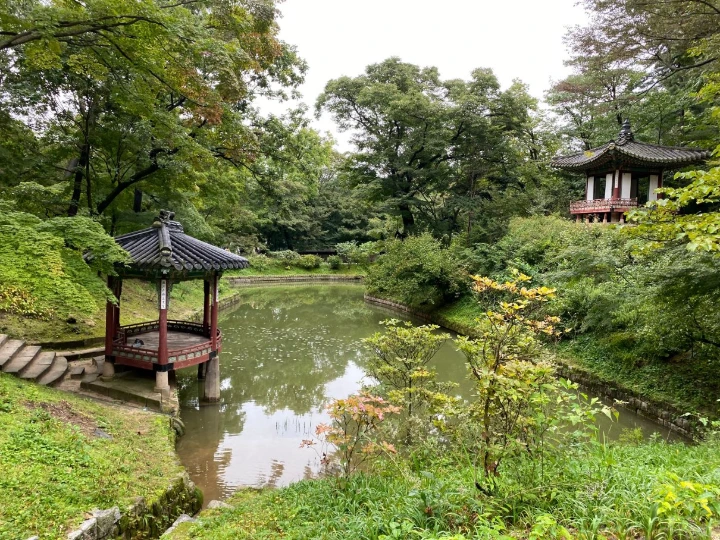
Image: A peek inside the Secret Garden (Huwon) at Changdeokgung Palace, Seoul, South Korea. Photo: Korean Drama Insider personal collection.
More Than a Royal Retreat
Changdeokgung was not only a place of beauty and rest. It remained connected to some of the final chapters of Korea’s monarchy.
The Korea–Japan Treaty of 1910 was concluded in Heungbokheon, a building attached to Daejojeon Hall. In later years, members of Korea’s last imperial family continued to live within the Nakseonjae area of the palace.
Empress Sunjeong returned there in 1960, and Crown Princess Yi Bangja and Princess Deokhye spent their final years within the palace grounds. Both women died in 1989.
Changdeokgung Today
Today, visitors can explore the main palace buildings independently or join scheduled guided tours.
Highlights include Donhwamun Gate, Injeongjeon Hall, the royal council and living quarters, Nakseonjae and the palace’s many courtyards and covered walkways.
The Secret Garden requires separate admission and is generally visited according to a scheduled entry system. Attendance is limited, with spaces divided between advance online reservations and same-day ticket sales. Because tours can sell out, especially during spring and autumn, reserving ahead is strongly recommended.
The garden is beautiful throughout the year, but it is especially popular during autumn, when its forested paths and ponds are surrounded by red and gold foliage.
Gyeongbokgung may represent the grandeur and ambition of the Joseon Dynasty, but Changdeokgung reveals something quieter: how Korea’s kings lived, rested and found refuge within nature.
Planning Your Visit to Changdeokgung Palace
Where is Changdeokgung Palace?
Changdeokgung is located at 99 Yulgok-ro in Jongno-gu, Seoul, near the Bukchon and Insadong neighborhoods.
How do I get there?
Take Seoul Subway Line 3 to Anguk Station and use Exit 3. The palace is roughly a five- to ten-minute walk from the station, depending on your pace and entrance route.
When is Changdeokgung open?
The palace is generally open Tuesday through Sunday and closed on Mondays. Seasonal closing times vary, with longer hours during summer and earlier closing during winter. Current schedules should always be checked before visiting.
Do I need a separate ticket for the Secret Garden?
Yes. General palace admission and Secret Garden admission are separate. The garden has timed entry and limited capacity, so an advance reservation is recommended.
Can I visit the Secret Garden without a tour?
Access rules can vary by season and program, but the garden is a restricted viewing area entered according to scheduled sessions. Check the official reservation site for the format offered on your chosen date.
How much time should I allow?
Allow around one to two hours for the main palace grounds. Plan closer to three hours if you are also visiting the Secret Garden, since the garden route is extensive and includes hills and uneven pathways.
Is admission free if I wear hanbok?
Visitors wearing qualifying traditional or modernized hanbok may receive free general palace admission. The outfit must include both a proper upper and lower garment. See official guidelines. There are many hanbok rental companies near the palaces that can help you meet the guidelines. Special programs and Secret Garden admission may still require a separate ticket.
Where can I find current admission and reservation information?
The best source is the official Korea Heritage Service Royal Palaces and Tombs Center website. It provides current hours, admission details, guided-tour schedules, closures and Secret Garden reservations. Seoul’s official tourism site, VisitSeoul.net, also provides directions and general visitor information.
Seoul's Five Grand Palaces Series
Explore all five of Seoul's historic royal palaces:
Changdeokgung Palace
👇 Join the newsletter so you don’t miss any updates!
Keep Watching, Keep Feeling
Thanks for reading. 💖
If you enjoy thoughtful K-drama recommendations, reviews, and hidden details, explore more here on Korean Drama Insider.
🎬 Want more? Check out our other articles and watch lists for more heartfelt, spoiler-free K-drama reviews and recommendations, straight from one drama fan to another.