Image: Gwanghwamun, the main gate of Gyeongbokgung Palace, Seoul, South Korea. Photo: Korean Drama Insider personal collection.
Part One: Gyeongbokgung Palace
For the next five weeks, we’re stepping inside Seoul’s Five Grand Palaces—each with its own history, personality and role in Korea’s royal story.
From the grandeur of Gyeongbokgung to the peaceful gardens of Changdeokgung and the unexpected Western architecture of Deoksugung, these palaces offer far more than beautiful backdrops. Together, they tell the story of the Joseon Dynasty, the Korean Empire and centuries of royal life in Seoul.
This week, we begin with the grandest of them all: Gyeongbokgung Palace.
The oldest and largest of Seoul’s five royal palaces, Gyeongbokgung, sometimes translated as Gyeongbok Palace, was built in 1395 at the base of Bugaksan Mountain by King Taejo, also known as Yi Seong-gye. After overthrowing the Goryeo Dynasty and founding Joseon, he established Gyeongbokgung as the new dynasty’s principal palace. Its name is commonly translated as “Palace Greatly Blessed by Heaven.” Because of its location in northern Seoul, it is also known as the Northern Palace.
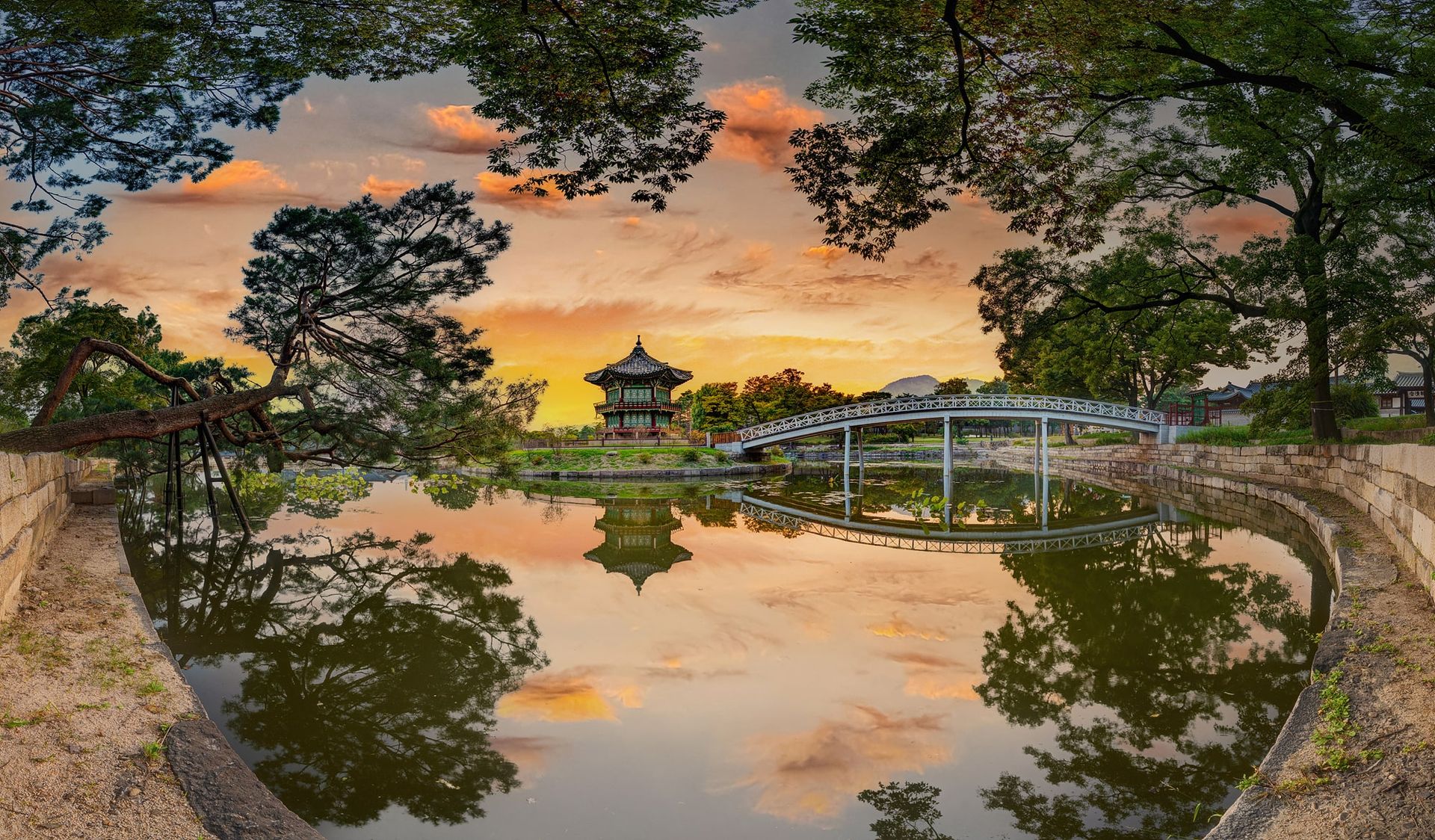
Hyangwonjeong Pavilion at Gyeongbokgung Palace. Photo: Royal Palaces and Tombs Center, used under KOGL Type 1.
During the reign of King Sejong the Great, Gyeongbokgung became an important center of scholarship, science and culture. King Sejong is best known for overseeing the creation of Hangul, Korea’s writing system, during a period often remembered as one of Joseon’s great cultural golden ages.
In 1592, the palace was destroyed by fire during the Japanese invasions of Korea known as the Imjin War. It remained largely in ruins for more than 270 years, while Changdeokgung served as the primary royal residence.
Gyeongbokgung was finally rebuilt in 1867 under Heungseon Daewongun, the father and regent of King Gojong. The enormous reconstruction created a sprawling complex of hundreds of buildings containing royal residences, government offices and ceremonial spaces.
Tragedy struck the palace in October 1895, when Queen Min—later known as Empress Myeongseong—was assassinated inside the palace grounds. King Gojong left Gyeongbokgung soon afterward, and the palace’s role at the center of royal life came to an end.
During the Japanese colonial period, more than 90% of the palace buildings were removed or destroyed. A major restoration program began in 1990, and the work continues today. The first phase restored 89 buildings, while long-term plans aim to gradually recover more of the former palace complex.
Today, visitors can explore its grand throne hall, peaceful pavilions and reconstructed royal residences. Many also rent traditional hanbok from nearby shops and stroll through the grounds dressed in the styles once worn during Korea’s royal era.
And because restoration is still ongoing, each return visit may reveal another piece of Gyeongbokgung’s remarkable history brought back to life.
Take a Piece of Seoul With You
Inspired by the palaces, gates and hidden pathways of Seoul, our Seoul Scapes lock screens bring a little Korean beauty to your everyday screen.
Planning Your Visit to Gyeongbokgung Palace
Where is Gyeongbokgung Palace?
Gyeongbokgung is located at 161 Sajik-ro in Jongno-gu, Seoul, near Gwanghwamun Square, Bukchon Hanok Village and the National Folk Museum of Korea.
How do I get there?
Take Seoul Subway Line 3 to Gyeongbokgung Station and use Exit 5. You can also take Line 5 to Gwanghwamun Station and walk toward Gwanghwamun Gate.
When is Gyeongbokgung open?
The palace is generally open Wednesday through Monday and closed on Tuesdays. Hours vary by season:
- January–February: 9:00 a.m.–5:00 p.m.
- March–May: 9:00 a.m.–6:00 p.m.
- June–August: 9:00 a.m.–6:30 p.m.
- September–October: 9:00 a.m.–6:00 p.m.
- November–December: 9:00 a.m.–5:00 p.m.
Last admission is typically one hour before closing. Holiday schedules and special evening openings may vary, so check the official site before visiting.
How much time should I allow?
Allow around two to three hours to explore the main palace grounds at a relaxed pace. Plan additional time if you also want to visit the National Palace Museum of Korea or the National Folk Museum, both located near or within the palace complex.
Can I see the Changing of the Royal Guard ceremony?
Gyeongbokgung regularly hosts a colorful reenactment of the Joseon dynasty era Royal Guard Changing Ceremony near Gwanghwamun Gate. The schedule may change because of weather, seasonal programs or special events, so confirm current performance times before your visit. More information can be found on the official website, kh.or.kr or at VisitKorea.or.kr.
Is admission free if I wear hanbok?
Visitors wearing qualifying traditional or modernized hanbok may receive free general palace admission. The outfit must include both a proper upper and lower garment. See official guidelines. There are many hanbok rental companies near the palaces that can help you meet the guidelines. Special programs and Secret Garden admission may still require a separate ticket.
Are guided tours available?
The palace offers scheduled guided tours in Korean and several foreign languages. Tour times and availability may change, so check the official Royal Palaces and Tombs Center website before your visit.
Are there special nighttime openings?
Gyeongbokgung sometimes offers limited nighttime viewing programs during selected periods of the year. These are separate special events and may require advance reservations or timed tickets.
Where can I find current admission and visitor information?
The best source is the official Korea Heritage Service Royal Palaces and Tombs Center website, which provides current hours, admission details, guided-tour schedules, temporary closures and special-event information. Seoul’s official tourism site, VisitSeoul.net, also provides transportation and general visitor information. You can also check out the Gyeongbokgung Palace Visitor Assistant for a guide to helpful shortcuts for visiting the palace.
Seoul's Five Grand Palaces Series
Explore all five of Seoul's historic royal palaces:
Gyeongbokgung Palace
👇 Join the newsletter so you don’t miss any updates!
Keep Watching, Keep Feeling
Thanks for reading. 💖
If you enjoy thoughtful K-drama recommendations, reviews, and hidden details, explore more here on Korean Drama Insider.
🎬 Want more? Check out our other articles and watch lists for more heartfelt, spoiler-free K-drama reviews and recommendations, straight from one drama fan to another.